
T-Mobile Home Internet And TV: Options For Seniors And Key Features

T-Mobile Home Internet and TV options for seniors describe a set of consumer services and compatible technologies that combine fixed wireless internet access with television viewing via streaming platforms and streaming-capable hardware. The concept centers on delivering household internet through a cellular-based gateway or router and using that connection to access live or on-demand television via third-party streaming services and media players. For older adults, relevant features often include simple setup, consistent signal inside a living space, and access to familiar television interfaces through connected devices.
These options typically separate the network access component (the fixed wireless gateway and wireless plan) from the television component (streaming subscriptions and hardware). The internet service provides bandwidth and local network features such as Wi‑Fi and guest networks; streaming services supply content libraries and live channels; and devices like streaming sticks or set-top boxes decode and present television on the user’s display. Account controls, accessibility settings, and device compatibility are commonly considered when assessing whether a configuration meets a senior household’s needs.
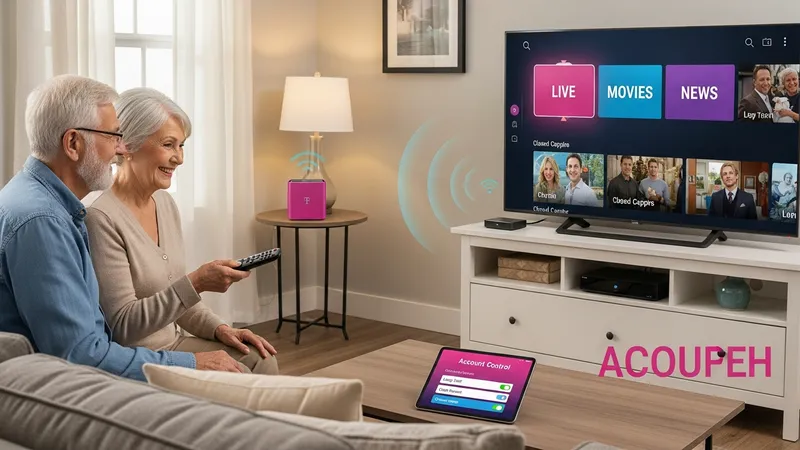
- T-Mobile Home Internet (fixed wireless gateway) — a cellular-based home gateway that creates a local Wi‑Fi network and provides internet access using 4G/5G signals; typically paired with an indoor gateway device and a web or app-based account portal.
- Streaming television services (examples: YouTube TV, Hulu + Live TV, Sling TV) — subscription platforms that deliver live channels and on-demand content over an internet connection and are commonly used with fixed wireless services.
- Streaming devices and smart-TV platforms (examples: Roku, Amazon Fire TV, Apple TV) — hardware options that attach to a television or are built into a smart TV to run apps for streaming services and provide remote control and accessibility features.
Comparing the pieces of this setup, fixed wireless internet solutions may offer simpler installation than wired alternatives because they often require only placement of a gateway and basic configuration. Performance can vary with signal strength, indoor placement, and local network congestion. Streaming television services differ in channel lineups, cloud DVR policies, and supported device ecosystems; seniors may prioritize services that replicate familiar channel groupings or offer straightforward navigation. Devices vary in remote control design, voice search options, and text size adjustments, which can affect usability for people with limited dexterity or vision.
Bandwidth requirements for television viewing commonly influence which combination of internet plan and streaming service is appropriate. Single‑stream standard‑definition content can use modest bandwidth, while multiple simultaneous high‑definition or 4K streams typically increase demand. When a home relies on a fixed wireless gateway, interior placement near a window or elevated position may improve signal reception and therefore streaming stability. Network features such as Quality of Service (QoS) or guest networks can help separate video traffic from other devices, which may reduce interruptions during viewing sessions.
Equipment considerations may be particularly relevant for seniors because simplicity and reliability often matter more than advanced feature sets. Choices include a basic plug‑and‑play gateway, an easy‑to-use streaming stick with a simplified remote, or a smart TV with accessible menus. Accessibility features to look for include closed captions, customizable font sizes, voice navigation, and hardware remotes with clearly labeled buttons. Account management tools—such as web portals and mobile apps—may offer billing overview, network diagnostics, and parental or guest controls; how these are presented can affect ease of use for older adults and their caregivers.
Support and ongoing management are part of the overall picture: options may include online knowledge bases, phone support, or community forums. For seniors, predictable billing, clear device replacement policies, and transparent data or usage notes can reduce confusion. The next sections examine practical components and considerations in more detail.