
Online Psychology Degrees For Seniors: Key Admission Requirements And Application Steps

Program formats and qualification levels for senior online psychology students
Online psychology programs for seniors come in several qualification levels, including bachelor’s completion, master’s degrees, and certificate sequences. Bachelor’s completion programs often accept transfer credit and focus on core major requirements alongside general education. Master’s programs typically concentrate on advanced theories, research methods, or applied practice and may include thesis, capstone, or practicum components. Certificate programs provide targeted coursework in areas such as aging, counseling techniques, or research methods and can serve as continuing education. Each format carries different time commitments and academic expectations.
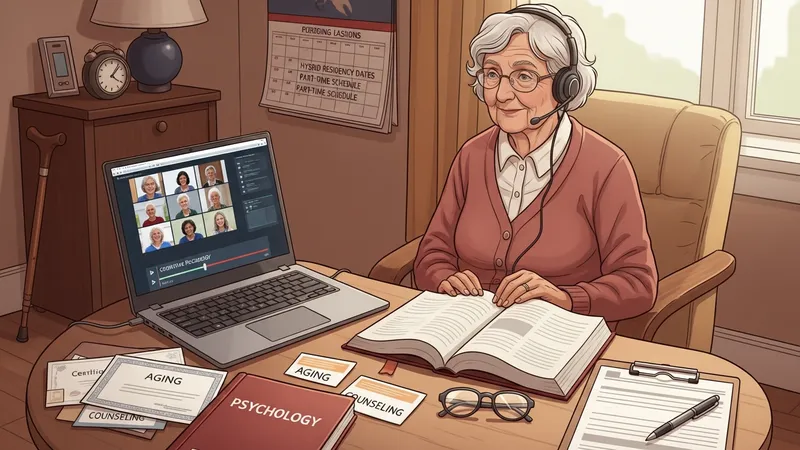
Delivery formats vary from fully asynchronous courses to hybrid or low-residency models that require occasional on-campus sessions. Asynchronous formats may be more accessible to seniors managing variable schedules, while synchronous sessions can offer real-time interaction and cohort cohesion. Part-time enrollment is commonly available and may extend program duration but allow steadier pacing. Programs that require practical training often outline options for local supervision, community placements, or short residency periods, and these logistics can influence feasibility for senior learners.
Qualification outcomes differ by level: a bachelor’s degree confers undergraduate credentialing, while a master’s degree may be positioned for advanced study or roles that require graduate training. For those seeking clinical licensure, additional supervised hours and specific coursework are typically required beyond the degree. Certificate completions usually signify focused competency in a topic area but do not generally confer licensure. Seniors should examine program learning outcomes and any external professional standards relevant to desired post-completion activities.
Credit accumulation and transfer policies significantly affect completion timelines for seniors returning to study. Institutions often limit the number of transfer credits accepted or set residency requirements for graduation. Recognition of prior learning through portfolios or competency-based assessments can shorten time to degree where available. Academic advising can clarify how previous coursework and experiential learning translate into credit, and whether part-time study or accelerated course loads may suit individual circumstances.